Dioramas
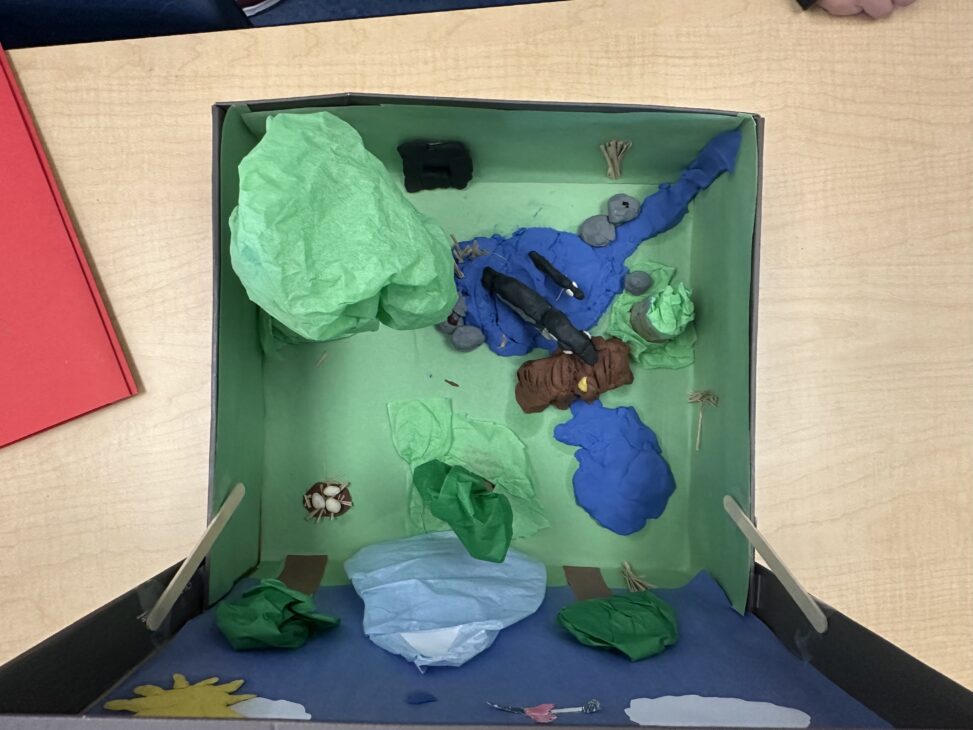
Dioramas are a fun activity where students use boxes to create mini 3D worlds. Most commonly used are shoe boxes. However, any type of small to medium-sized box can be used. Then, materials such as modelling clay, paper, tissue paper, and drawing materials are used to create a mini world inside the box.
What We Did
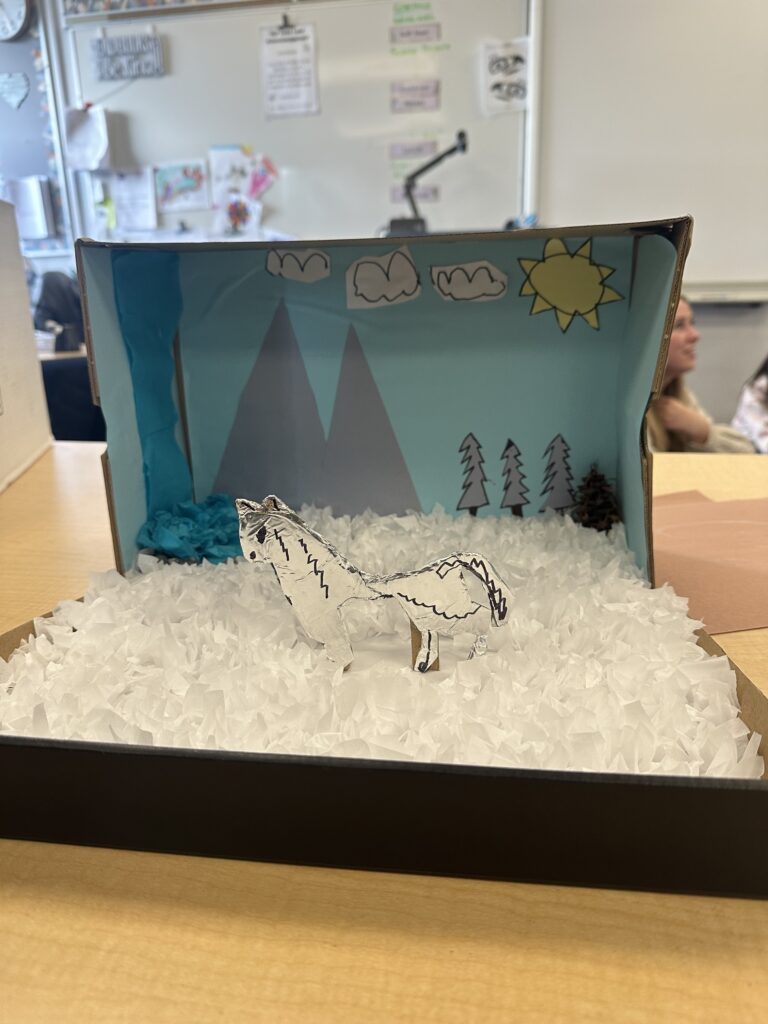
My university class joined forces with a local grade 2 class to create dioramas. Our inspiration was local animals! Each student chose a book on their animal, and the following week, we came into their class to read their books and get started on our dioramas. My student, I was paired up with, chose the animal wolf. We read a National Geographic on the wolf, and I taught him that the wolf in our local Indigenous language, Ktunaxa, is kakin.
How It Went
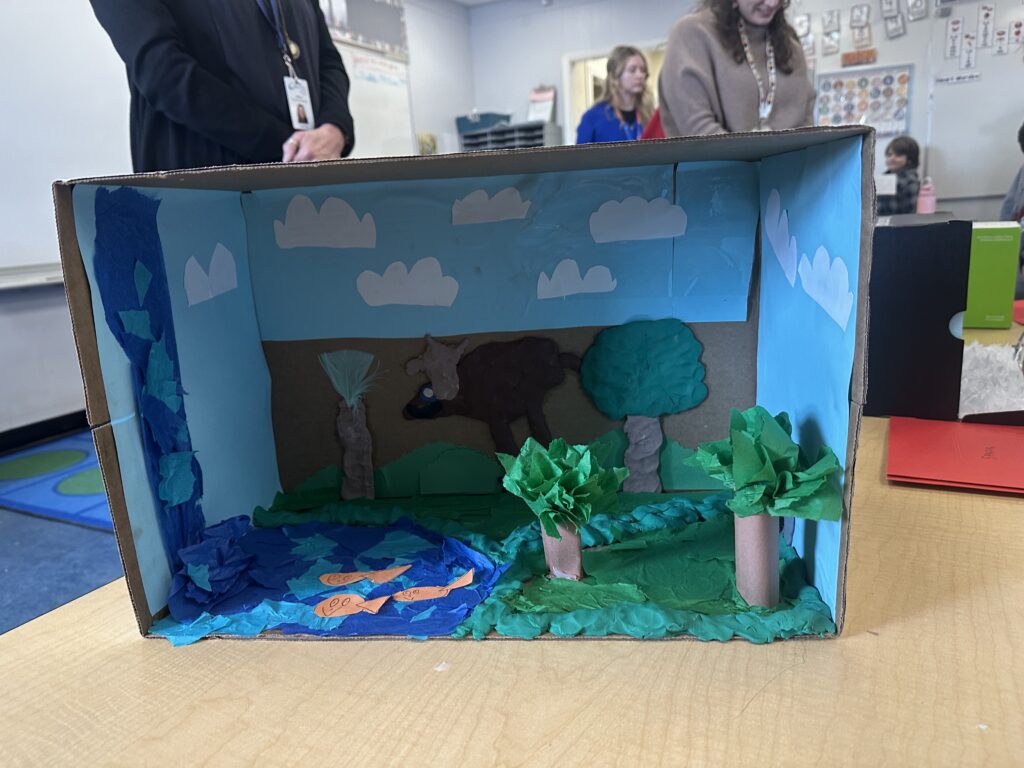
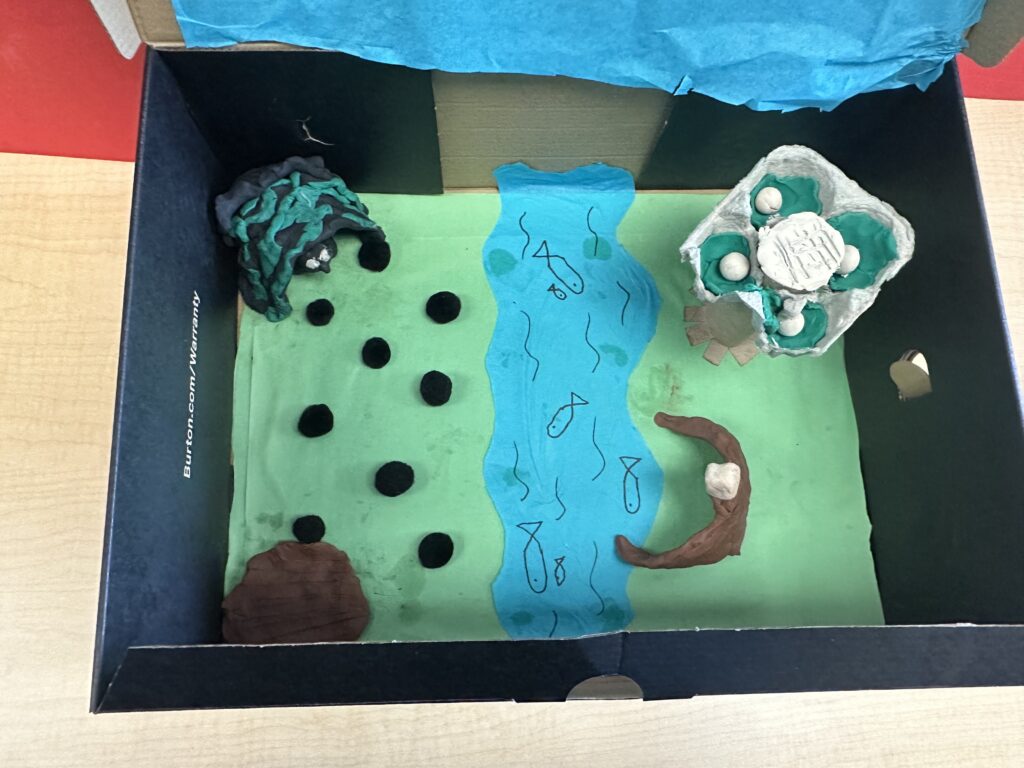
Each student did an amazing job on their dioramas! The experience was so much fun and definitely an activity I will do with future students. The student I was paired with told me he was nervous at the beginning but by the end of his project was so proud of the diorama he created. The entire class was engaged the entire time through the project and we completed it in two short sessions!
For Next Time
Though creating dioramas was so much fun the activity was also a lot of work. In the future I would plan to do this activity over the course of a few weeks and scaffold the project. By breaking it into small chunks students won’t become overwhelmed by such a large project. Pairing up a teacher candidate with a grade 2 students was an efficient way to take on a diorama project because of all the extra help.
My Reflection
I chose to reflect on dioramas because at first I was nervous to task grade 2s with such a big project. However, they completely crushed their dioramas! It reminded me to not limit my students. They are capable of so much more than we think! The project was also so much fun and such a creative way to blend science with literacy and bringing in Indigenous content in an authentic and meaningful way.
Curriculum Connections
Grade 2 Science British Columbia Curriculum Connections
Big Ideas: Living things have life cycles adapted to their environment
Curricular Competencies:
- Experience and interpret the local environment
- Communicate observations and ideas using oral or written language, drawing, or role-play
- Express and reflect on personal experiences of place
- Demonstrate curiosity and a sense of wonder about the world
- Recognize First Peoples stories (including oral and written narratives), songs, and art, as ways to share knowledge
- Sort and classify data and information using drawings, pictographs and provided tables
Content:
- similarities and differences between offspring and parent
- metamorphic and non-metamorphic life cycles of different organisms
- First People use of their knowledge of life cycles
Provide Feedback
You must be logged in to post a comment.