
Gibb’s Reflective Model
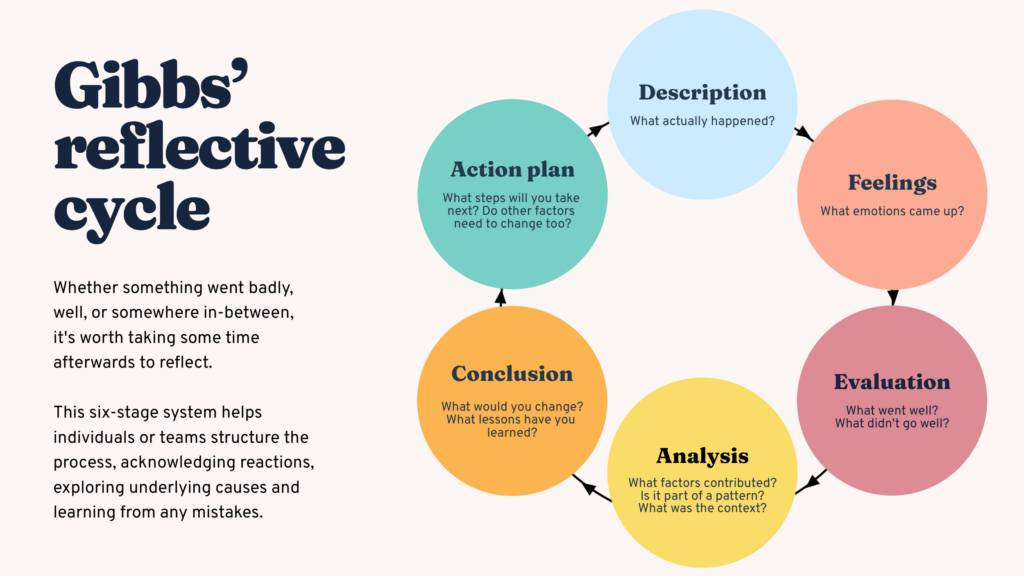
Gibbs is a model we are familiar with in the program. It is a six-step model to promote critical thinking and a deeper analysis of events. Hopefully, after completing the six steps of reflection, you can learn from what happened and improve for next time! Even when you think you nailed a lesson, you should still take the time to stop and reflect on the positive. Over the past few years, I have practiced reflecting using the Gibbs reflective cycle a few times, and I find the trickiest part is identifying the feelings I experience in an event, but I have noticed that the more I reflect, the easier it becomes. However, I enjoy that the reflection is similar to a journal entry and a step-by-step cycle.
Driscoll’s Model of Reflection
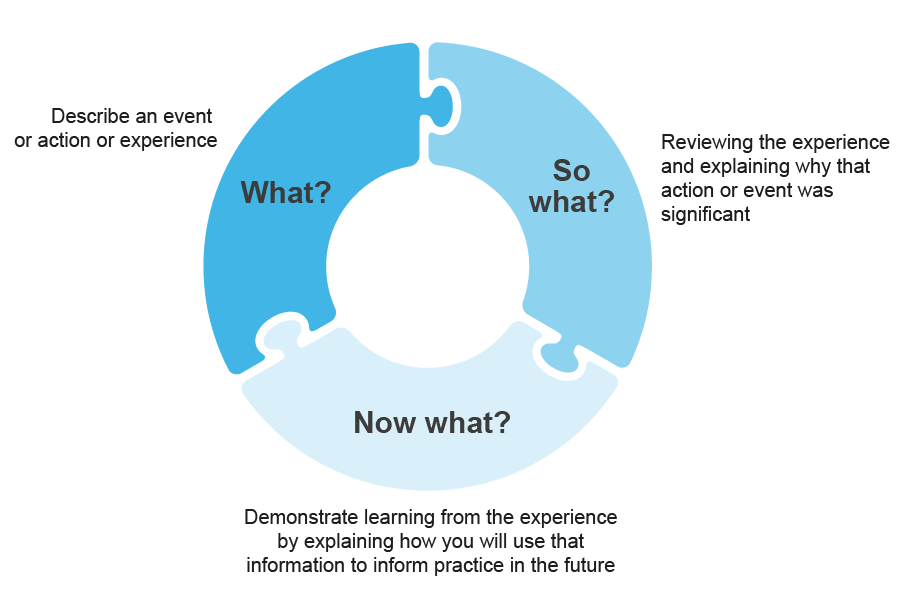
Driscoll’s model of reflection is again a model used to reflect on a situation and decide what comes next. It is a three-step model that also works in a cyclical fashion, such as the Gibbs model. However, Driscoll’s reflective cycle is simpler and more straightforward that Gibb’s.
When to Use Which Reflective cycle?
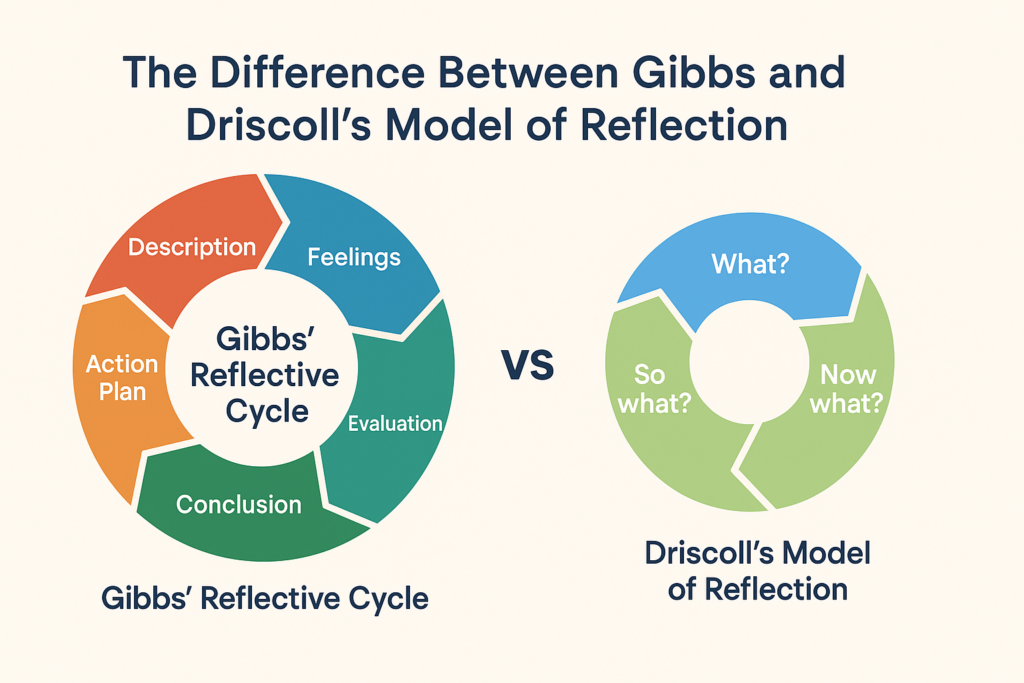
Though both reflective cycles include thinking about the event, what happened and what will come next, both cycles have a time and place. Gibbs offers a deeper analysis of an event and can be used as a journal format or a paper. Whereas Driscoll’s is more applicable to day-to-day reflection because it has fewer steps and is more time-efficient. However, using Driscoll’s reflective cycle can often leave out details such as emotions you felt during an event.
My Turn to Reflect!
I am using Driscoll’s model of reflection to reflect on a lesson I recently taught.
1. Experience
I worked with a partner to create a music lesson for a local grade 5/6 class. We prepared a beautiful lesson with multiple modifications and asked for feedback on the lesson before we taught it. We showed up to the class prepared with all of our materials (basketballs, pencils, whiteboards and paper), but at some moments we did not have all of the students’ engagement.
2. So What?
This moment was significant because we planned our lesson to be interactive and hands-on the entire time, hoping that would result in high levels of student engagement. However, after discussing with the teacher of the class, she gave us some feedback for next time, such as taking more time to model activities even though it may seem obvious that a grade 6 student would know how to throw a basketball and explained that when students do not know what to do, they often will not even try.
3. Now What?
Luckily, I received honest feedback from the teacher, so I have a clear path for next time. Next time, I am going to leave more time to model my activities, which I needed as a reminder, so I am very thankful for her feedback. I will also create visuals for next time because some students could have benefited from the visual reminder.
Note* All images have been hyperlinked for more information and photo citation.