Discovering a New Plant!
Note: This activity was taken and adapted from Judi Poole, 2026.
Starting in Kindergarten, students start learning about plants, both local and global. The curriculum starts by teaching little ones the basic needs of a plant and the types they may see in their community. And with each grade level, the biology of plants deepens until high school, where students learn advanced plant anatomy and plant cycles.
Not only do plants connect with all grade levels of the British Columbia curriculum, but plants are deeply connected to Indigenous People’s way of doing and knowing. There are many books teachers can use to bring local plants and Indigneous People’s knowledge into classrooms.
An activity introduced to me by Judi Poole that I really enjoyed is called You Have Discovered a New Plant! The activity is simple and fun. Start by reading a book to students that involves plants and flowers with some identity piece. Some examples I like are…
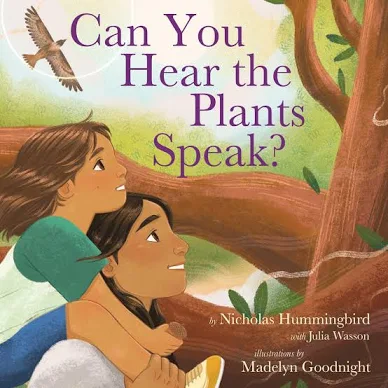
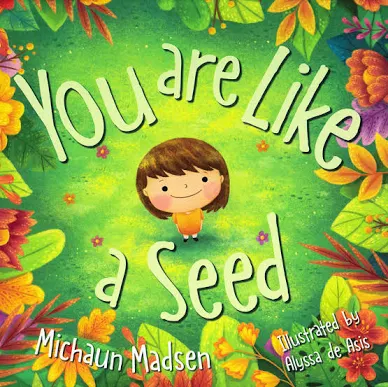
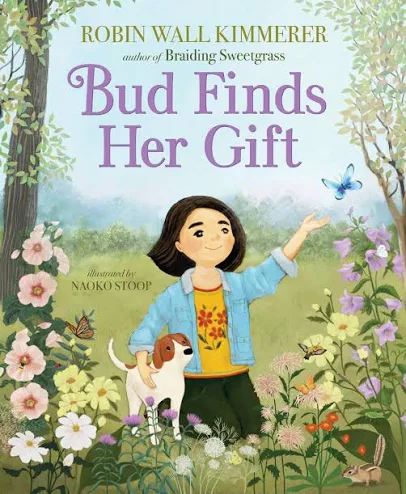
Images are hyperlinked.
For our activity, we used cards with local Ktunaxa plant names and cards Judi created with the local name, Ktunaxa name and scientific name.
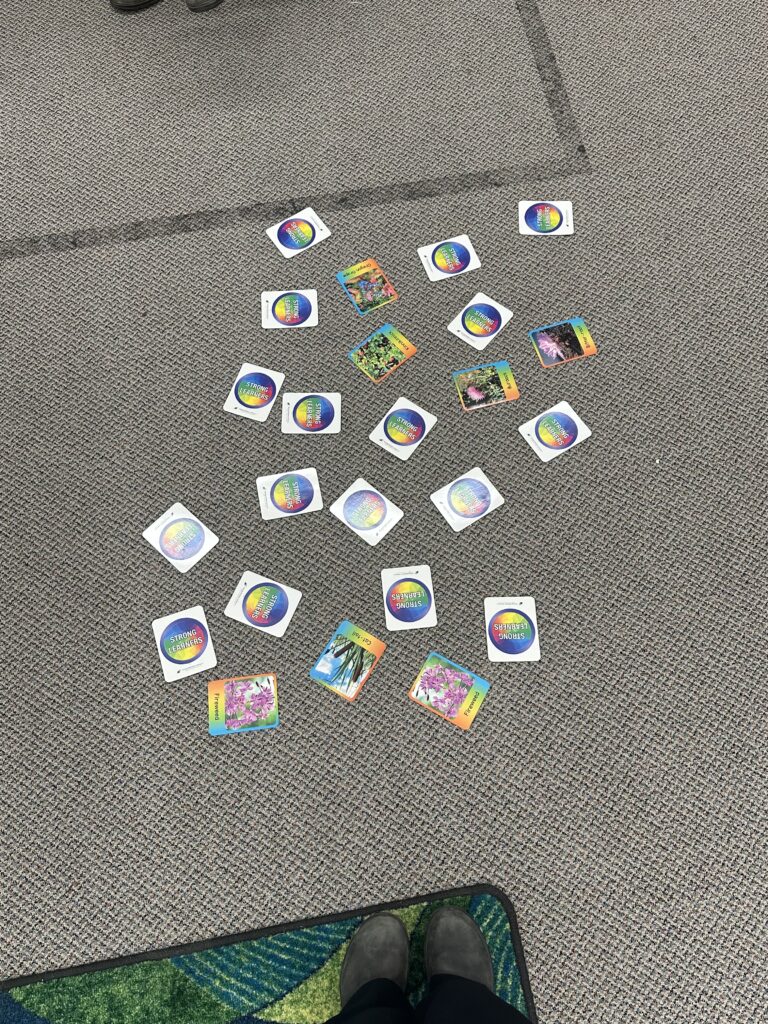
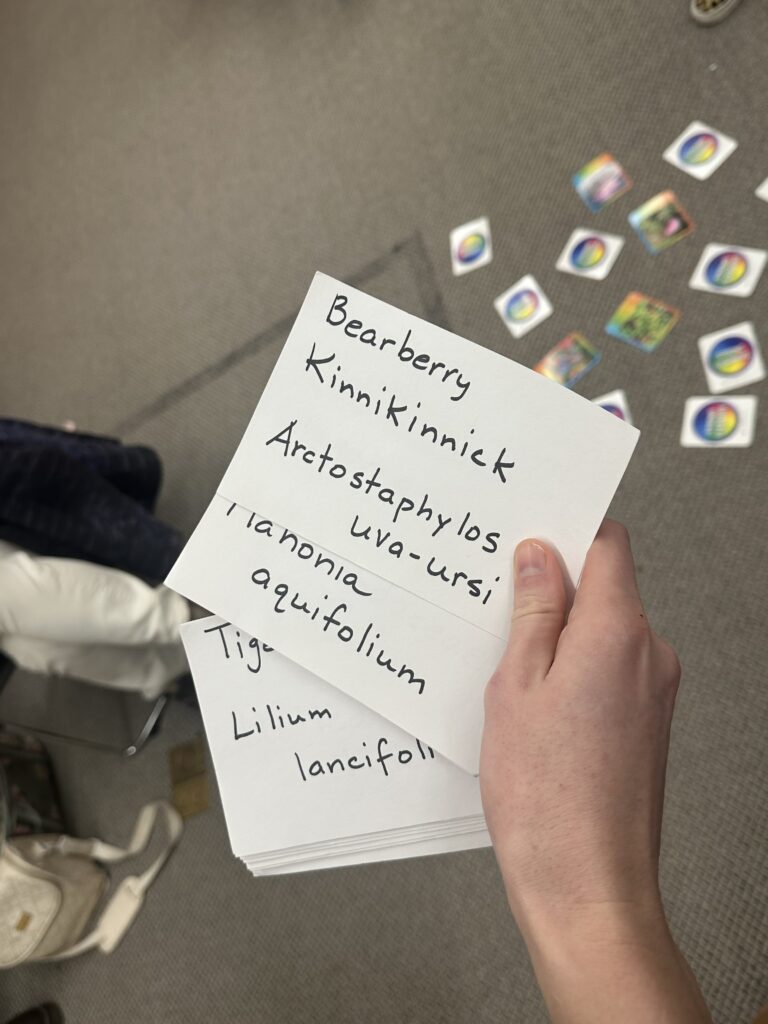
Next, find art supplies from around the school and thick branches. We used..
- Branches washed up on river banks that Judi collected for us prior to class.
- Hot glue
- Yarn
- Tissue paper
- Beads
- Pipe cleaners and more
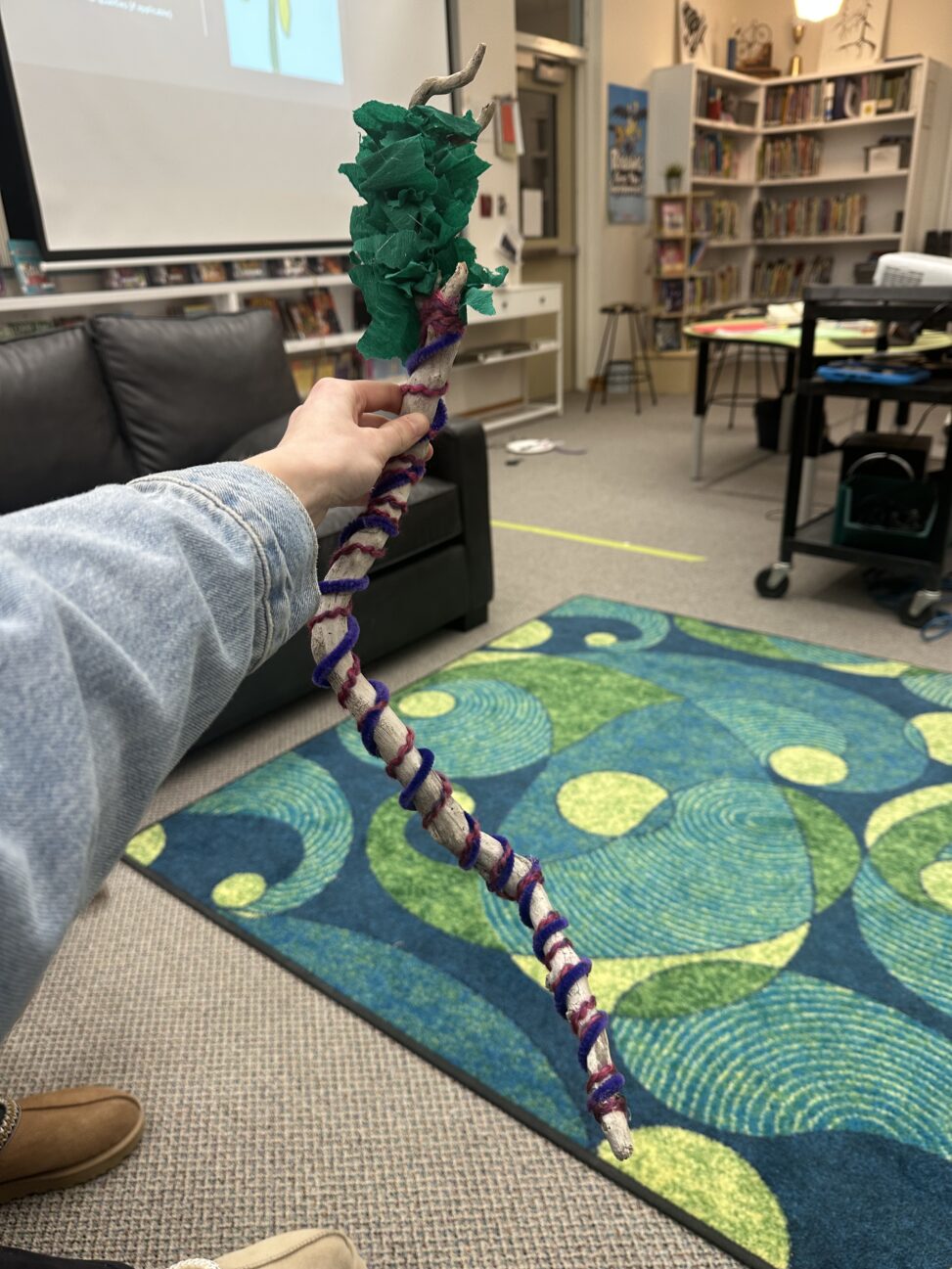
Then, explain to students that they will be creating newly discovered plants using the materials provided. Students will also create a scientific name, create a story of how they found this plant and imagine a way the plant will positively impact the community.
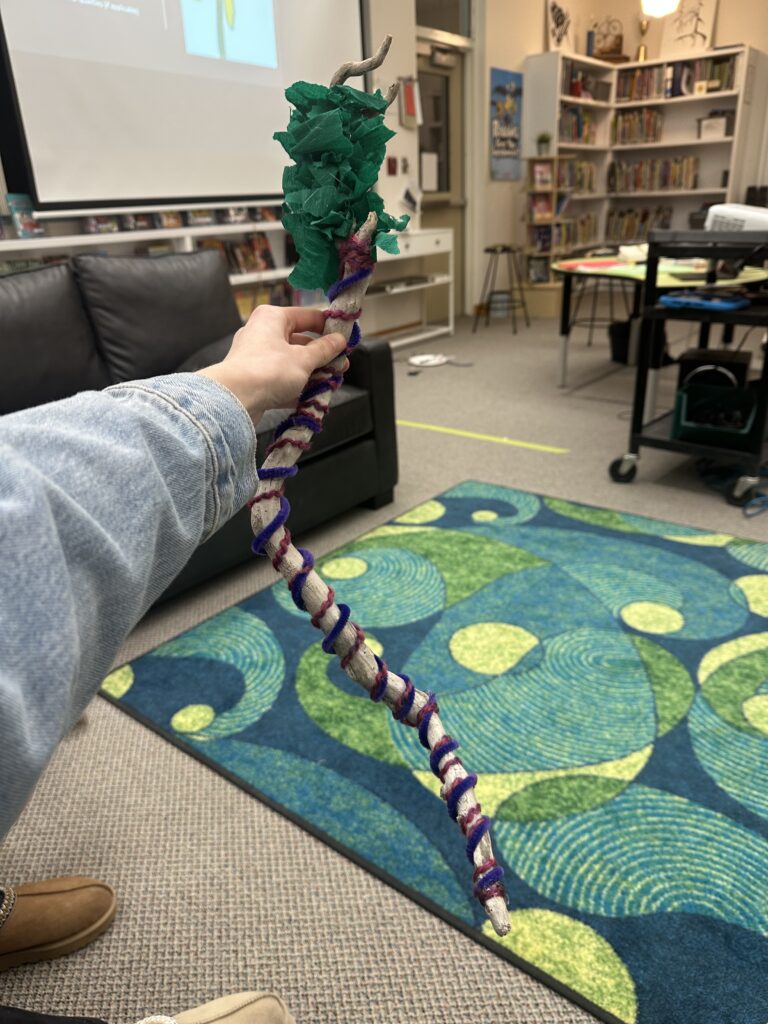
This plant is called Conversatious-enewis. I found it going on a walk on my property with my partner. Where we discovered that it sparked meaningful conversation between us. Its power is to give people the courage to have conversations in order to heal relationships. Created by Kenna Scory.
Some other class examples.
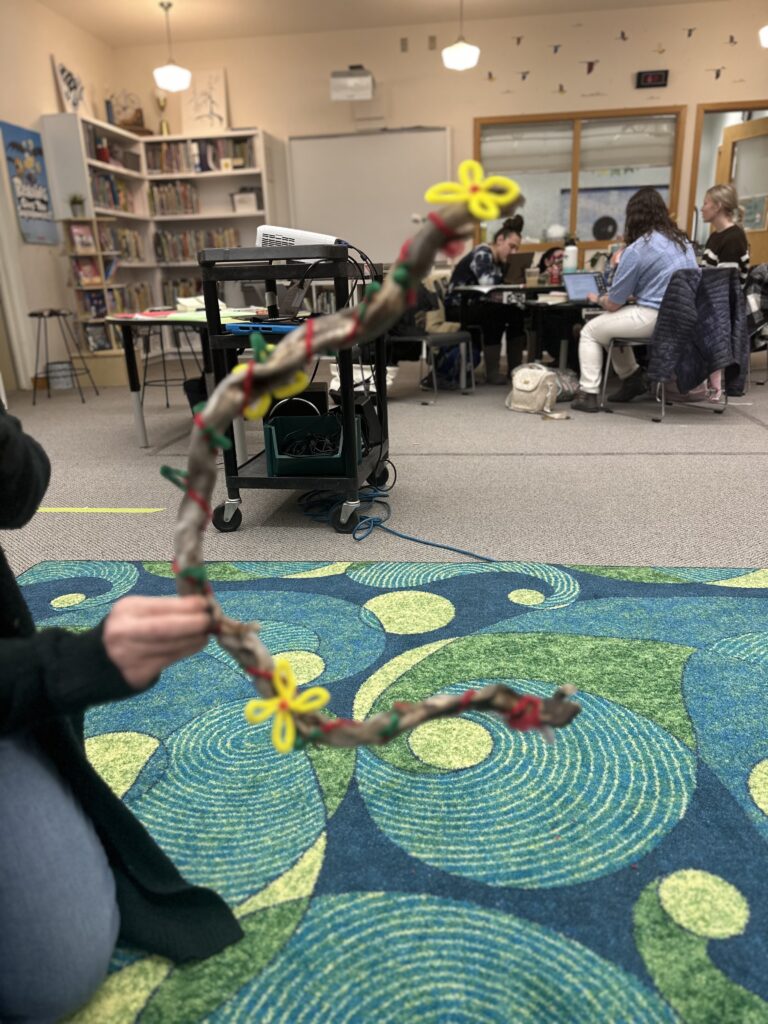
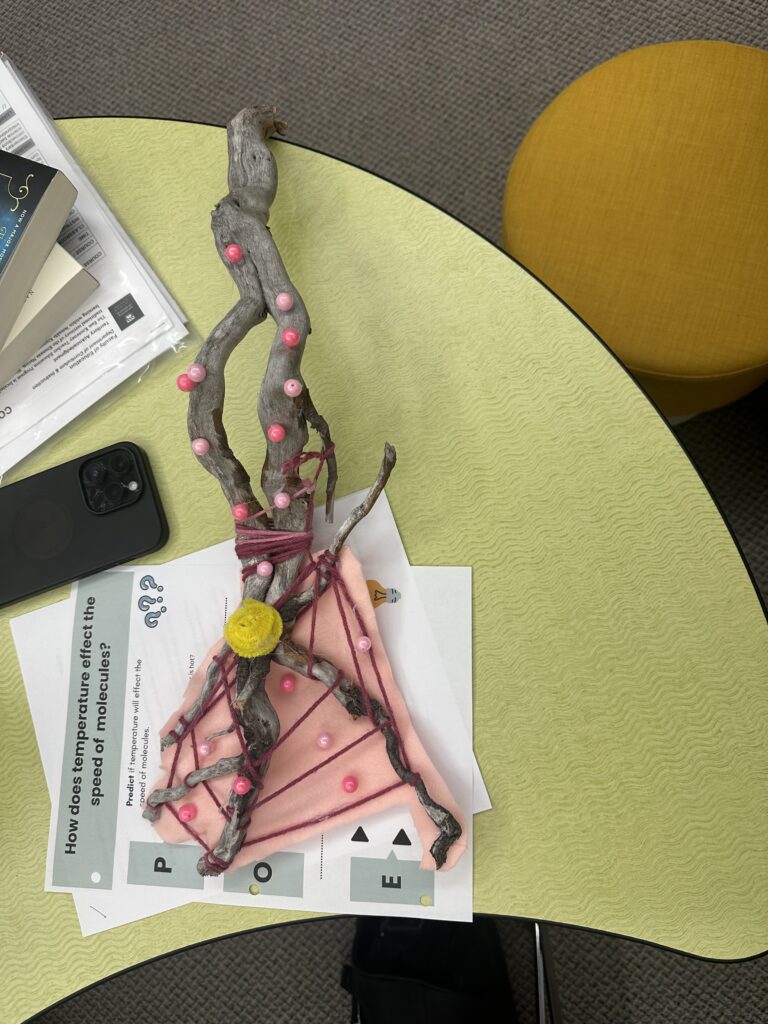
Created by Eva Sommerfeld and Ryan Anderson.
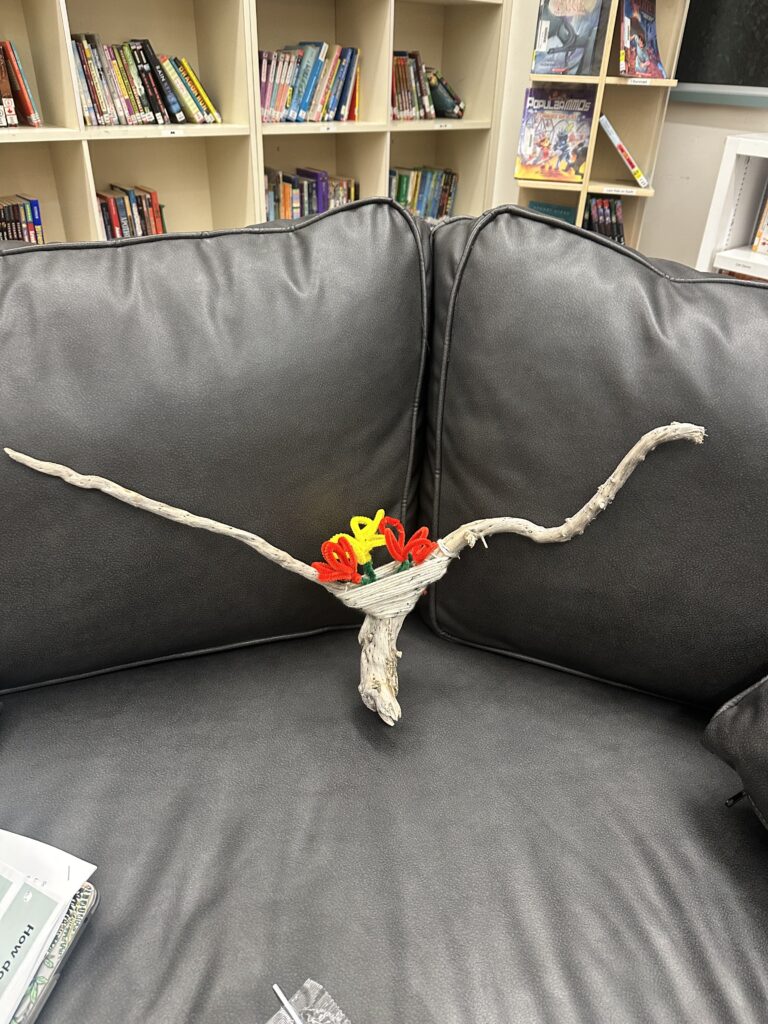
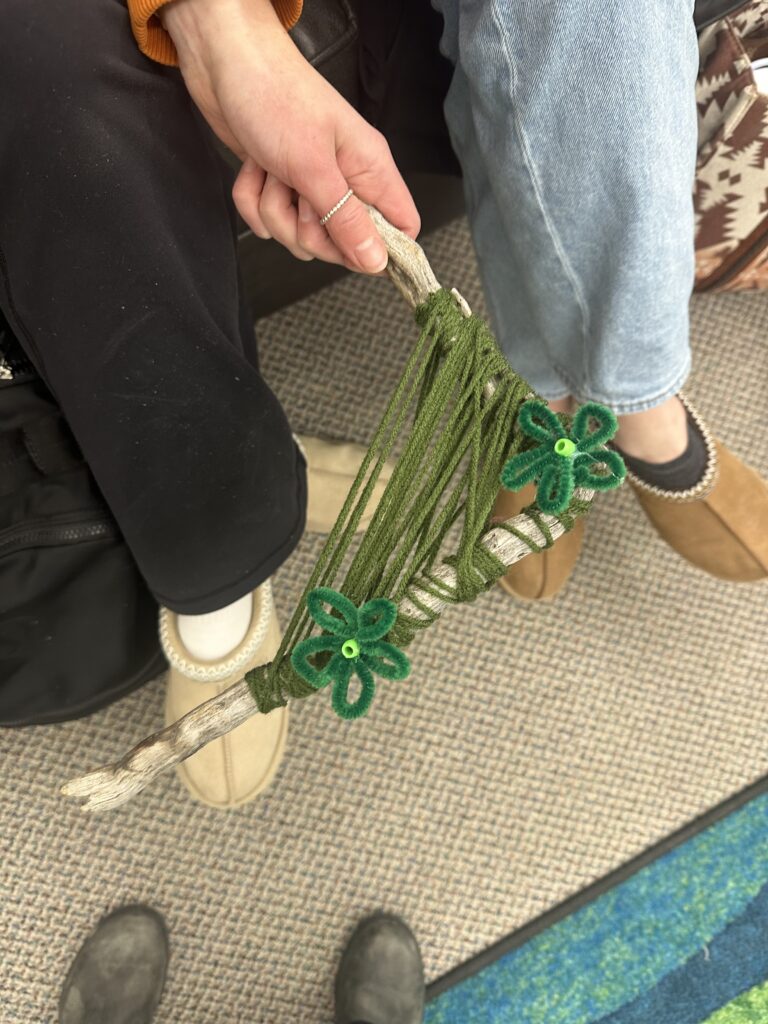
Created by Josie Mackie and Ryley Haynes.
I included this activity in my reflection because this activity made me realize that science can be creative. Growing up I never had the opportunity to create my own science. I remember copying scientists’ experiments and recording my data and hypothesis on a sheet to be graded. This activity helped me to think outside the box and create new experiences for my future students. I have the belief that science is a prescribed order of steps, and though that is still true, I realized it does not always have to be that way. I can be creative and make science cross-curricular with anything, like art!